California Weekly Roundup: SNAP Work Rules Threaten Access
Get link
Facebook
X
Pinterest
Email
Other Apps
Plus: How H-1B visa fees will affect rural health care; federal funding for California special needs students; the Bay Area's first "ICE-free Zone"; Oroville Hospital bankruptcy; ketamine use; hepatitis B recommendations; and more
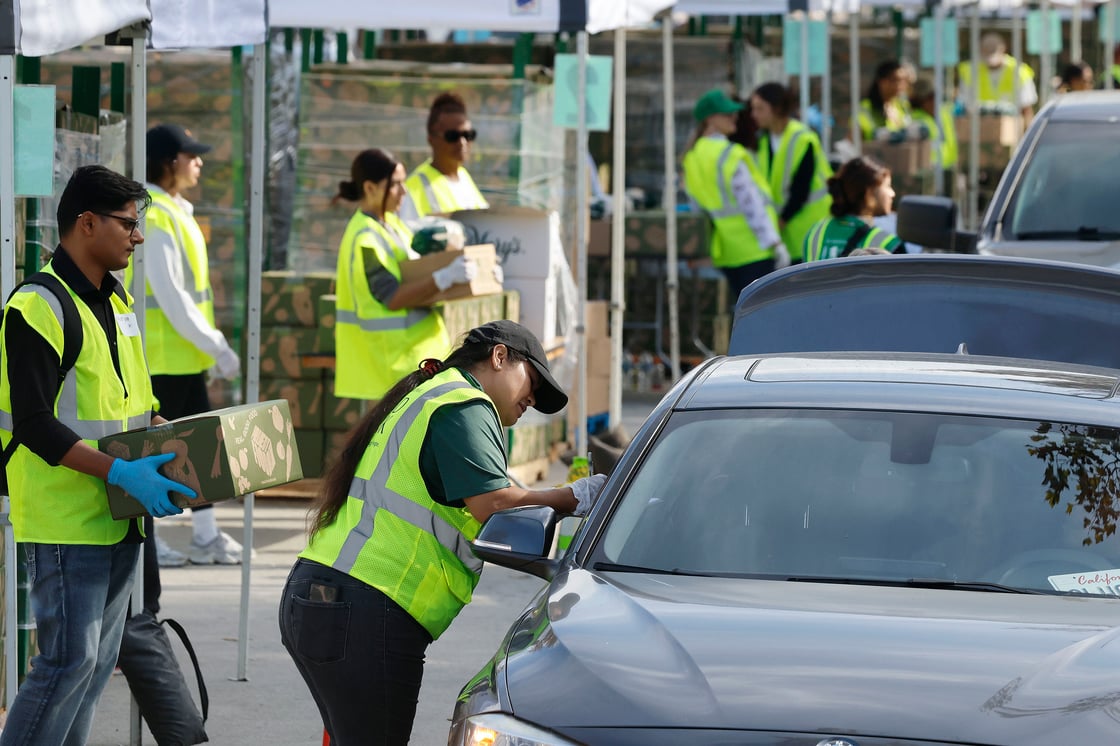
Free food is distributed last month at Exposition Park in Los Angeles.
(MARIO TAMA / GETTY IMAGES)
By Renuka Rayasam, Katheryn Houghton and Samantha Liss
Alejandro Santillan-Garcia is worried he's going to lose the aid that helps him buy food. The 20-year-old Austin resident qualified for federal food benefits last year because he aged out of the Texas foster care system, which he entered as an infant.
The Supplemental Nutrition Assistance Program — commonly referred to as food stamps, or SNAP — helps feed 42 million low-income people in the United States. Now, because of changes included in the One Big Beautiful Bill Act, to keep his food benefits Santillan-Garcia might soon have to prove to officials that he's working.
He said he lost his last job for taking time off to go to the doctor for recurrent stomach infections. He doesn't have a car and said he has applied to a grocery store, Walmart, Dollar General, "any place you can think of" that he could walk or ride his bike to. "No job has hired me."
Many adult SNAP recipients under 55 already needed to meet work requirements before the One Big Beautiful Bill Act became law. Now, for the first time, adults ages 55 to 64 and parents whose children are all 14 or older must document 80 hours of work or other qualifying activities per month. The new law also removes exemptions for veterans, homeless people, and former foster care youths, like Santillan-Garcia, that had been in place since 2023.
Sharon Cornu is the executive director at St. Mary's Center, which helps support homeless seniors in Oakland, California. She said the rule changes are sowing distrust. "This is not normal. We are not playing by the regular rules," Cornu said, referring to the federal changes. "This is punitive and mean-spirited."
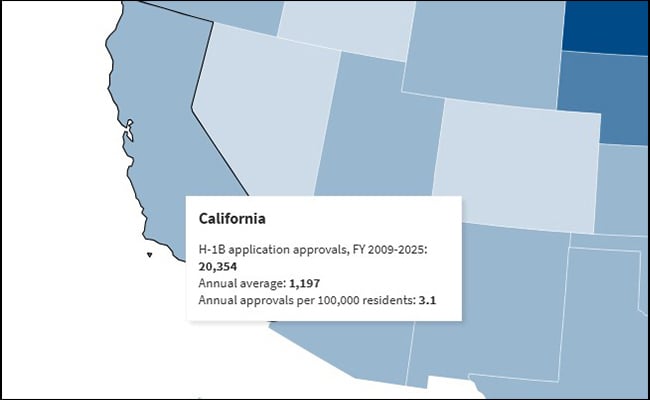
Dozens of health care organizations have asked the Trump administration to shield the doctors, nurses, and techs they need to fill shortages from the president's new $100,000 visa fee for skilled foreign workers. So far, there's no sign of a reprieve.
Follow us online for more KFF Health News coverage:
President Trump's budget includes nearly $1 trillion in cuts to Medicaid, which funds a wide swath of services to disabled children, including speech, occupational and physical therapy, wheelchairs, in-home aides and medical care. All children with physical, developmental or cognitive disabilities – in California, nearly 1 million – receive at least some services through Medicaid. (Jones, 12/4)
The ruling is tempered since the temporary release of the funds doesn't guarantee it will be permanent or timely enough to retain all mental health workers. (Sanganeria, 12/9)
Santa Clara Family Health Plan (SCFHP) is partnering with community-based organizations in Santa Clara County to encourage residents to enroll in Medi-Cal, keep their coverage by completing annual renewals and use their benefits before new regulations take effect in 2026. (12/5)
The Trump administration must stop its use of California National Guard members in Los Angeles and return control of the troops to the state and Gov. Gavin Newsom, a federal judge in San Francisco ruled Wednesday. (Thanawala and Lloyd, 12/10)
Cary Lopez Alvarado, a U.S. citizen, was nine months pregnant when, according to her lawyers, federal immigration agents seized her in June in the Los Angeles suburb of Hawthorne. They shoved her onto a parked truck and put shackles under her stomach, her lawyers said. (Egelko, 12/9)
Santa Clara County supervisors on Tuesday passed an ordinance that will limit federal immigration officers from carrying out raids on municipal property — creating what was believed to be the Bay Area's first official "ICE-free zone." (Flores, 12/9)
A federal judge has dismissed Huntington Beach's lawsuit against the state's landmark sanctuary law, which limits cooperation between local law enforcement and federal immigration authorities. (Wang, 12/9)
A statement said the hospital will "remain open and continue to operate during the Chapter 11 process. Patient care remains our top priority and will be unaffected." (Gottesman, 12/9)
A Sonoma County pediatrics advisory panel has levied its strongest criticism to date of Providence's recent decision to close the inpatient pediatric ward at Santa Rosa Memorial Hospital. (Espinoza, 12/9)
Months after a public health clinic shut down in the city of Shafter, health officials say they are continuing to weigh options for health services in the community. (Rangel, Rodriguez-Delgado, 12/5)
Officials announced the review Monday, days after Alberto Rangel was stabbed in front of his co-workers in the hospital's HIV care clinic. (Vainshtein, 12/8)
Sutter Health faces backlash after signaling it will end puberty blockers and hormones for patients under 19 as families protest and seek answers. (Allday, 12/8)
Symba officials have announced that its recuperative care and short-term post-hospitalization programs are nationally certified by the National Institute for Medical Respite Care. (De La Cruz, 12/3)
A new digital library based at UC San Diego aims to massively increase the number of drugs that can be easily detected in samples collected from patients. (Sisson, 12/9)
Salvador Plasencia, who sold and injected Matthew Perry with ketamine in the weeks leading up to the actor's death in 2023, was sentenced to 30 months after pleading guilty earlier this year. (Mejia and Buchanan, 12/3)
California clinics' doors are flying open, patients are lining up and ketamine is being prescribed off-label for everything from depression to chronic pain. What's missing are clear rules to guide its use. (McClurg, 12/9)
Two weeks after giving preliminary approval to a law that would outlaw kratom sales, the Fresno City Council pivoted, giving a final green light to a modified law that restricts, rather than bans, the sale of kratom products to adults. (Sheehan, 12/5)
The Trump administration has temporarily paused a plan to divert billions of dollars in homelessness spending away from permanent housing, a move that critics of the plan, including a Silicon Valley congressman, said is a win for local efforts to fight homelessness and prevent formerly unhoused Californians from being forced back to the street. (Varian, 12/9)
Two projects providing long-term housing and support services will close next month due to federal funding cuts, leaving around 80 formerly homeless individuals at risk of living on the streets again. (Fannin, 12/9)
During her first week in office three years ago, Mayor Karen Bass issued a sweeping directive to speed up affordable housing applications. Now, that plan is permanent. (Flemming, 12/9)
A Colombian immigrant family was the first to participate in San Francisco Mayor Daniel Lurie's large vehicle buyback program, one of his signature initiatives, and trade its RV for an apartment. (Gurevich, 12/9)
OpenAI is diving into California's competitive world of ballot measure politics for the first time to counter another kids' AI safety proposal with its own plan for reining in the very technology it develops. (Katzenberger, 12/9)
Though Congress is not where most Americans look for decisions that shape where they can live, housing is becoming an increasingly potent issue in Washington. (Morris and Koseff, 12/9)
It's a Texas-to-California abortion case with a Bay Area doctor in the middle and a Gordian knot of a legal question: What happens when states with opposing laws collide in federal court? (Hosseini, 12/4)
Health officials for California and three other West Coast states on Friday said all infants should get vaccinated against hepatitis B vaccine at birth despite a decision by a federal vaccine advisory panel to end the practice. (Ho, 12/5)
The California Department of Public Health is urging people to avoid foraging for and eating wild mushrooms this season after 21 people have been hospitalized with severe liver damage. (Wright, 12/9)
Vega Farms in Dixon filed a recall notice with the California Department of Public Health on Friday for more than 1,500 dozen of its in-shell eggs. (Pedrosa, 12/9)
A year's worth of data shows South Bay residents are constantly exposed to low levels of hydrogen sulfide gas from the polluted Tijuana River that could harm their health in the long run. (Elmer, 12/8)
This Week's 'KFF Health News Minute'
Immigration enforcement personnel are showing up in hospitals, and road-safety advocates worry regulations aren't keeping up with the popularity of e-bikes.
KFF Health Newsis a national newsroom that produces in-depth journalism about health issues and is one of the core operating programs at KFF — the independent source for health policy research, polling, and journalism.
(c) 2025 KFF. All rights reserved.
KFF
185 Berry St., Suite 2000, San Francisco, CA, 94107, United States
Get your first pass at the day's top health care policy news. View on our site , with interactive table of contents. Not a subscriber? Sign Up Thursday, May 09, 2024 Visit KFF Health News for the latest headlines First Edition Today's early morning highlights from the major news organizations. KFF HEALTH NEWS ORIGINAL STORIES KFF Health News: Paid Sick Leave Sticks After Many Pandemic Protections Vanish Bill Thompson's wife had never seen him smile with confidence. For the first 20 years of their relationship, an infection in his mouth robbed him of teeth, one by one. "I didn't have any teeth to smile with," the 53-year-old of Independence, Missouri, s...











Comments
Post a Comment