KFF's survey research shows that health care costs are now the public's top economic concern, with most voters saying the issue will impact their vote in November's midterm elections. These concerns may grow more acute as many people navigate higher health insurance premiums following the loss of the Affordable Care Act's (ACA) enhanced premium tax credits, among other health care policy changes.
View KFF's latest on health care cost trends, data, and policy issues below.
KFF's latest tracking poll provides an early look at how the public and voters view health care issues, including costs, following a year of substantial debate and changes. On health care issues, including the cost of health care, voters currently trust Democrats more than Republicans, though neither party has an advantage on addressing the overall cost of living. Following the expiration of the ACA enhanced tax credits, two-thirds of the public say Congress did the "wrong thing" by not extending them.
In his latest column, President and CEO Dr. Drew Altman presents his Venn diagram of health care cost problems and shows how, in our fragmented health system, reducing one health cost problem often makes another worse.
Skyrocketing health care costs and insurance premiums combined with congressional inaction have forced a perilous decision upon many people: Pay higher prices for health insurance or go uncovered. KFF Health News is telling their stories.
News reports across the country trumpet major mergers and consolidation involving health insurers, physician practices, pharmacy benefits managers, hospitals and health systems, and other providers. RSVP to join this discussion on Wednesday, Feb 18 at 12 p.m. ET exploring the motivations behind horizontal and vertical consolidation in health care, its potential to lower or raise costs, the implications for patients and payers, and how policy makers could respond.
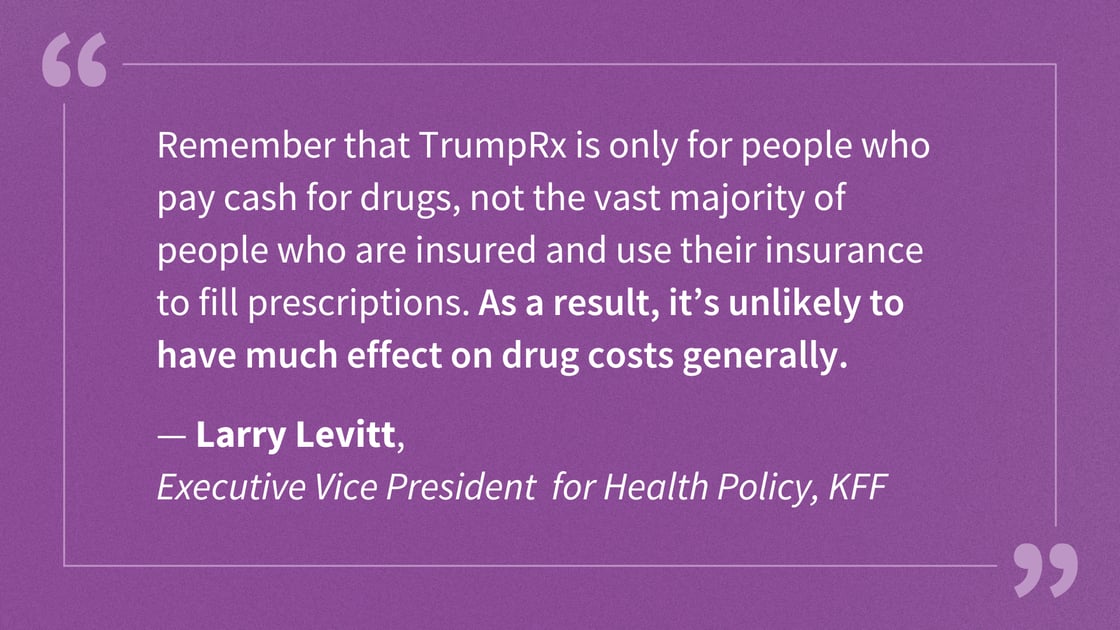
President Trump Proposes Codifying MFN Drug Pricing Deals But Key Details Are Missing While codifying most-favored-nation (MFN) drug pricing could be helpful for bringing more transparency to these arrangements and guaranteeing that drug companies will deliver on what they've promised, policymakers would need substantially more information to turn these backroom voluntary deals into law.
This brief explains the limitations of early data in understanding the impact of the expiration of enhanced premiums tax credit on ACA enrollment. It also provides a timeline of when more complete data will be available.
This analysis examines the tradeoffs ACA Marketplace enrollees must consider as they decide whether to keep their current plan or switch to a new one, following the expiration of the ACA's enhanced premium tax credits at the end of 2025.
Some states, particularly those operating State-Based Marketplaces (SBMs), have been preparing for the expiration of the ACA's enhanced premium tax credits and have moved to blunt the impact on consumers by implementing their own state-funded subsidies.
In his latest JAMA Forum column, KFF's Larry Levitt explores how unaffordable health care is in the U.S. in the context of the debate over extending enhanced ACA premium tax credits and an upcoming election where affordability will likely be front and center.
This chart collection offers insight into changes in health spending in the U.S. over time, as well as the driving forces behind spending growth. Health spending totaled $74.1 billion in 1970. By 2000, health expenditures had reached about $1.4 trillion, and in 2024 the amount spent on health more than tripled to nearly $5.3 trillion. A related interactive tool contains more of the latest National Health Expenditure data.
This brief provides an overview of the role of PBMs in managing pharmacy benefits, discusses federal efforts to reform certain PBM business practices, and explains the estimated federal budgetary impact of the recently enacted legislation.
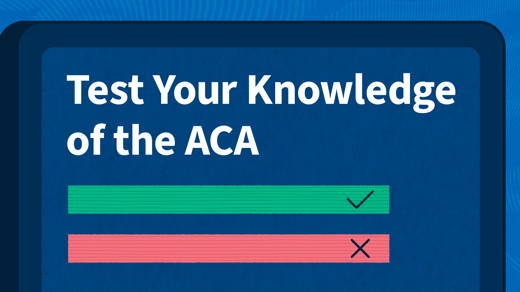
Take this ten-question quiz to see how much you know about how the ACA affects health insurance coverage and costs as well as who is eligible for financial assistance.
For many years, KFF polling has found that the high cost of health care is a burden on U.S. families, and that health care costs factor into decisions about insurance coverage and care seeking. These costs also rank as the top financial worry for adults and their families. This data note summarizes recent KFF polling on the public's experiences with health care costs.
Many Americans are expected to lose ACA or Medicaid coverage in the coming months and years as a result of the One Big Beautiful Bill Act and the expiration of enhanced pandemic-era subsidies. Doctors and researchers say there are still ways to find affordable care. (KFF Health News)
Sweeping changes to the ACA marketplace next year have been proposed by the Trump administration that focus on making more insurance plans available with higher annual out-of-pocket costs but lower premiums. (KFF Health News)
Millions of middle-class Americans who have Affordable Care Act marketplace plans are facing soaring premium payments in 2026. Some people are contemplating big life changes to deal with new rates that kicked in on Jan. 1. (KFF Health News)
More than a quarter of the agricultural workforce purchases health insurance through the individual marketplace, a much larger share than the overall percentage of U.S. adults. After a tough year for farmers, the loss of enhanced ACA subsidies is putting health insurance out of reach for many. (KFF Health News)
Get your first pass at the day's top health care policy news. View on our site , with interactive table of contents. Not a subscriber? Sign Up Thursday, May 09, 2024 Visit KFF Health News for the latest headlines First Edition Today's early morning highlights from the major news organizations. KFF HEALTH NEWS ORIGINAL STORIES KFF Health News: Paid Sick Leave Sticks After Many Pandemic Protections Vanish Bill Thompson's wife had never seen him smile with confidence. For the first 20 years of their relationship, an infection in his mouth robbed him of teeth, one by one. "I didn't have any teeth to smile with," the 53-year-old of Independence, Missouri, s...




![260203_Health-Care-Costs-Are-Top-Household-Expense_FI[1]](https://connect.kff.org/hs-fs/hubfs/260203_Health-Care-Costs-Are-Top-Household-Expense_FI%5B1%5D.png?width=1120&upscale=true&name=260203_Health-Care-Costs-Are-Top-Household-Expense_FI%5B1%5D.png)
![BTD_Darwinian-Approach-to-Health-Care_Website[1]](https://connect.kff.org/hs-fs/hubfs/BTD_Darwinian-Approach-to-Health-Care_Website%5B1%5D.png?width=1120&upscale=true&name=BTD_Darwinian-Approach-to-Health-Care_Website%5B1%5D.png)
![GettyImages-2195049868-PRICED-OUT-16x9-1[1]](https://connect.kff.org/hs-fs/hubfs/GettyImages-2195049868-PRICED-OUT-16x9-1%5B1%5D.jpg?width=1120&upscale=true&name=GettyImages-2195049868-PRICED-OUT-16x9-1%5B1%5D.jpg)
![GettyImages-2189387885-16x9-resized[1]](https://connect.kff.org/hs-fs/hubfs/GettyImages-2189387885-16x9-resized%5B1%5D.jpg?width=520&upscale=true&name=GettyImages-2189387885-16x9-resized%5B1%5D.jpg)

Comments
Post a Comment