Hi. We’re Daniel Chang and Fred Clasen-Kelly, KFF Health News reporters based in Florida and South Carolina, respectively. We’ve been reporting on the toll that firearms take on people and communities for the series Guns, Race, and Profit. Email us news tips at dchang@kff.org or fredck@kff.org.
By Daniel Chang and Fred Clasen-Kelly
Jacksonville, Florida, can be treacherous for children.
Since 2018, at least 375 in this city have been hospitalized for firearm injuries. Others did not survive, including a 7-year-old boy playing outside a house, a 13-year-old boy coming home from a football tryout, and a 5-year-old girl sitting in a parked car.
“There’s almost a de facto normalization of gun violence,” said Firas Madbak, chief of acute care surgery at UF Health Jacksonville, the only Level I trauma center in northeastern Florida.
Every year, hundreds of children in Florida are hospitalized with gunshot wounds, and overwhelmingly, they come from a few ZIP codes clustered in poor Black or Latino areas, an exclusive analysis of hospital data by KFF Health News and The Trace found.
Hospital billing data that the newsrooms obtained from the Florida Agency for Health Care Administration shows that from 2018 to 2024 more than 4,000 children 17 or younger were hospitalized for firearm injuries — a rate of about 1.5 a day.
The data does not identify patients but includes details about where they lived and their age, race, and other demographics.
The 32209 ZIP code northwest of downtown Jacksonville had among the highest rates of gunshot injuries, which led to 79 hospital patients under 18, including 11 younger than 12.
In a statement to reporting partner Action News Jax, Charles Griggs, director of community initiatives for Jacksonville, said the data reflects what city leaders “already know.”
“Violence is not random, but rooted in conditions that have gone unaddressed for too long,” he said in an email.
Madbak sees the toll of gun violence “day in and day out,” he said.
Treating so many young victims erodes morale among doctors, nurses, and first responders, “even though we don’t like to admit that,” he said. “It really is endemic, and especially in our community.”
The Florida Department of Health does not focus on gun violence as a public health threat, despite its being the nation’s leading cause of death for children and teens. Gov. Ron DeSantis and state lawmakers have pushed to make guns cheaper and more widely available.
Prior to our article’s publication, no one with the authority to address this public health crisis would agree to talk to KFF Health News about gun violence and its toll on Jacksonville’s children — not the Florida health department, DeSantis, Mayor Donna Deegan, or 18 of 19 members of the Jacksonville City Council.
Only councilperson Jimmy Peluso responded. He called the statistics from Jacksonville ZIP codes “disturbing” and “insane.”
“A lot of these neighborhoods have just felt like the wealth has left them,” he said, “and the city didn’t come in to put in the amount of work they needed to.”
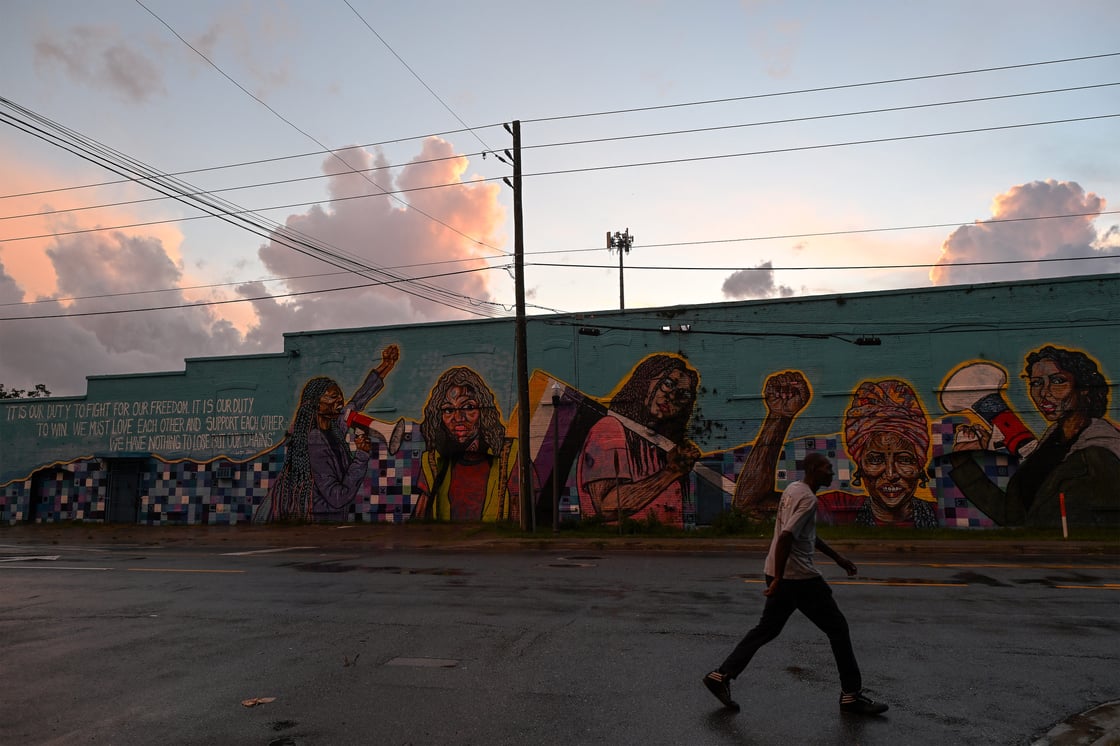
In ZIP code 32209, a nonprofit, Families of Slain Children, built a “Wall of Compassion” memorial listing hundreds killed by gun violence. Organizers have stood up a second wall nearby that is filling with names.









Comments
Post a Comment